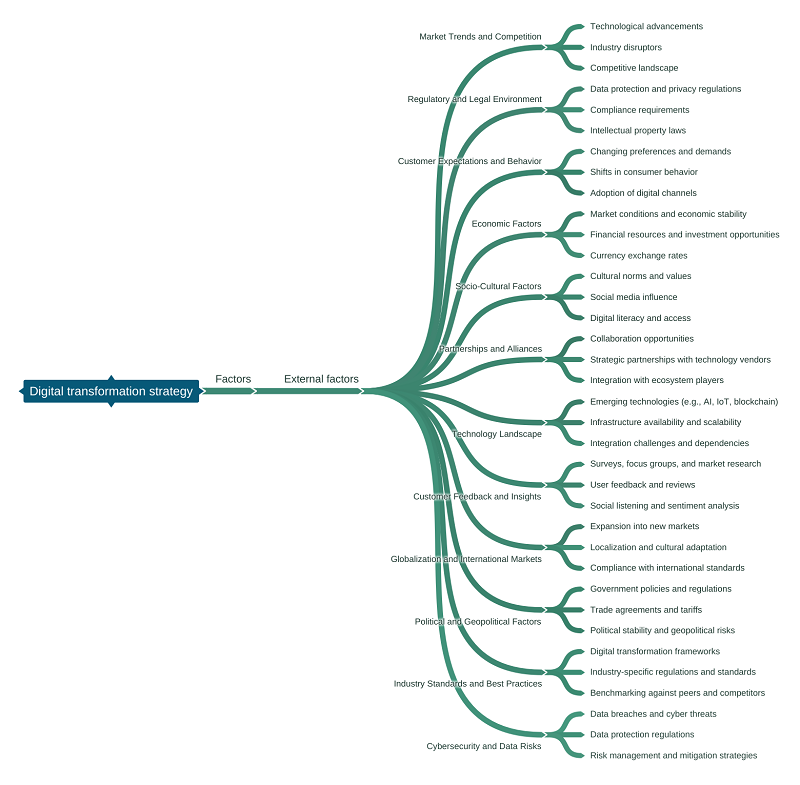
In today's rapidly evolving business landscape, digital transformation has become a necessity for companies aiming to thrive and remain competitive. It involves leveraging technology to reimagine business processes, enhance customer experiences, and drive organizational growth. However, successful digital transformation goes beyond technological considerations. It requires an understanding and adaptation to the external factors that shape the cultural and value landscape of a company.
This article explores the key external factors that can unlock cultural and value benefits in a digital transformation strategy (as a complement you can check our first article on strategy definition https://www.moroduru.com/2023/06/21/strategy/).
Market Trends and Competition
Companies can identify opportunities to differentiate themselves, deliver unique value propositions, and align digital initiatives with evolving customer expectations. This fosters a culture of innovation and agility, empowering employees to embrace change and seek continuous improvement.
Customer Expectations and Behavior
Customer-centricity drives digital transformation. By closely monitoring customer expectations and behavior, companies can align digital strategies with their target audience's needs and preferences. This customer-centric culture fosters empathy, responsiveness, and a commitment to continuous improvement, creating meaningful value for customers.
Regulatory and Legal Environment
Compliance with data protection, privacy regulations, intellectual property laws, and industry-specific requirements is crucial. Adhering to these regulations ensures ethical practices, builds trust, and cultivates a culture of transparency, integrity, and responsible digital practices.
Economic Factors
Economic conditions and financial resources influence the pace and scale of digital transformation. Economic stability facilitates investment, while market volatility requires adaptability. This dynamic culture fosters resilience and resourcefulness, enabling organizations to navigate uncertain economic landscapes.
Socio-Cultural Factors
Understanding cultural norms, values, and the influence of social media helps tailor digital strategies to diverse contexts. Embracing diversity and inclusivity promotes an inclusive culture, valuing different perspectives and fostering creativity. This enables companies to design digital experiences catering to a wide range of customers.
Partnerships and Alliances
Vendors, ecosystem players, and industry peers is vital for digital transformation success. These partnerships foster cooperation, knowledge sharing, and collective growth. Leveraging strengths and expertise accelerates innovation, drives value creation, and cultivates a collaborative culture.
Technology Landscape
Emerging technologies heavily influence digital transformation. A culture of curiosity and continuous learning enables employees to embrace new technologies, adapt to change, and stay ahead. Nurturing a learning culture empowers employees to explore emerging technologies and drive digital innovation from within.
In the digital era, successful transformation requires more than just technology implementation; it necessitates an understanding of the cultural and value landscape. By considering key external factors such as market trends, customer expectations, regulatory environments, and socio-cultural aspects, companies can unlock cultural and value benefits. A digital transformation strategy that embraces these factors fosters a culture of innovation, customer-centricity, integrity, collaboration, adaptability, inclusivity, and continuous learning. Ultimately, by aligning digital initiatives with cultural and value drivers, organizations can drive sustainable growth, enhance customer experiences, and stay ahead in a rapidly changing business environment.